Warm White, Cool White or Multicolor? How to Show Homeowners Before They Buy
Warm white, cool white or multicolor Christmas lights? Choose by house style, brick and siding colour and HOA rules, and show homeowners before they buy.

On this page
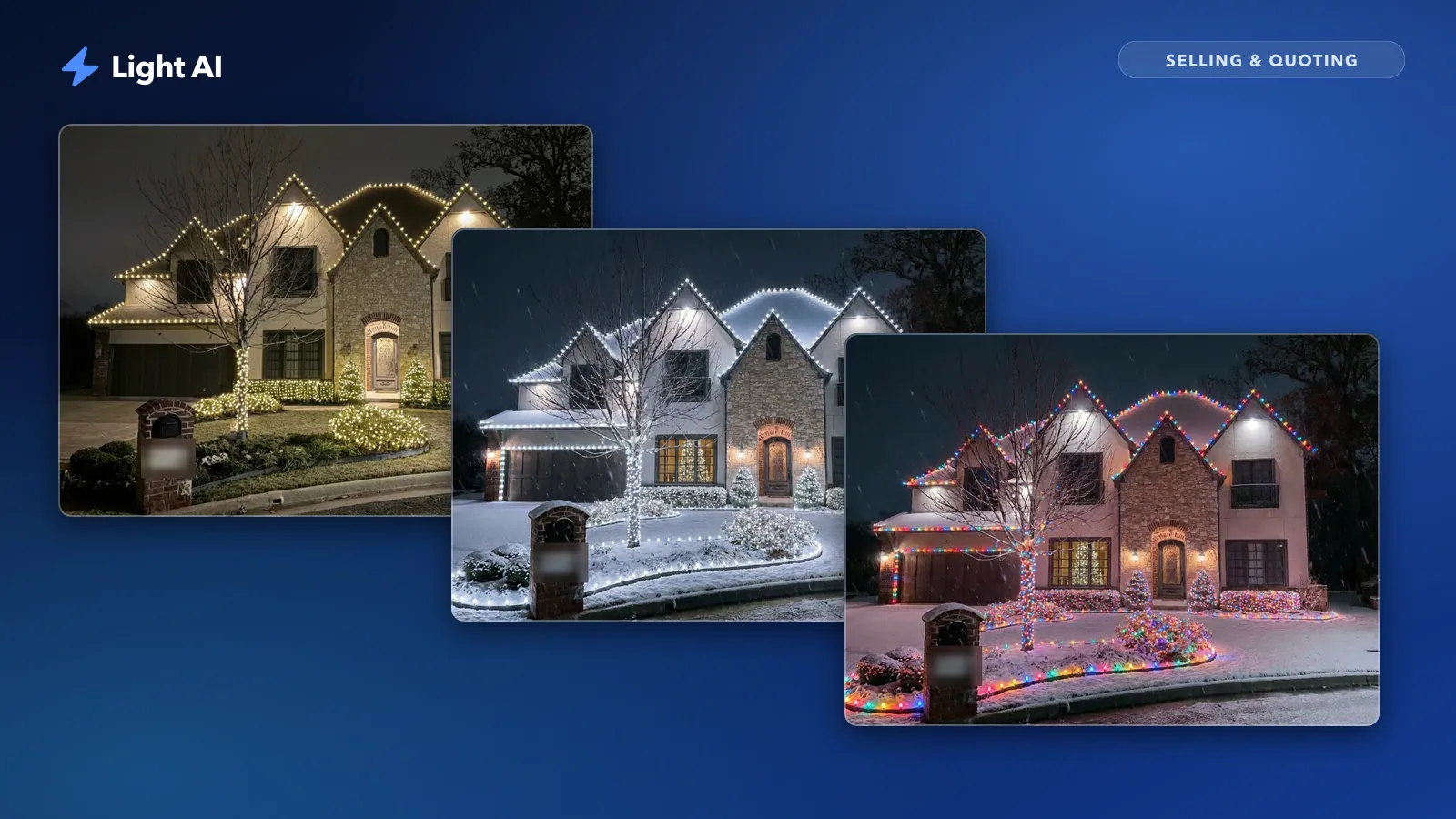
Warm white suits most homes, especially brick, stone, wood and traditional styles, because its soft yellow glow flatters warm materials. Cool white looks crisp on modern homes, white or gray siding and snowy settings. Multicolor reads as fun and nostalgic and works best on homes with simple colours and families who want a playful look. The best way to decide is to see the options on your own house before buying, not in a store box or a neighbor's yard.
This guide is for both homeowners choosing a look and contractors helping them choose. It covers what each colour does, how to match it to the house, and how to show options before anyone commits.
What warm white, cool white and multicolor really look like
The names hide a lot. Here's what each one looks like at night on a real house.
- Warm white is a soft, golden glow, close to classic incandescent bulbs. It feels cozy and traditional, and it blends with porch lights and window light.
- Cool white is a bright, clean, slightly blue-white. It looks icy and modern, and it stands out more against dark skies. Next to warm porch lights it can look harsh.
- Multicolor mixes red, green, blue, orange and yellow (the exact mix varies by product). It's cheerful and nostalgic and reads well from the street, but it can look busy on a complicated roofline.
LED products vary, so one brand's warm white can look more yellow than another's. If you're a contractor, know exactly what your own stock looks like and show that, not a generic photo.
Match the colour to the house style
House style is the first thing to look at. The lights should look like they belong to the architecture.
| House style | Usually best | Also works | Be careful with |
|---|---|---|---|
| Traditional, colonial, craftsman | Warm white | Multicolor for a nostalgic feel | Cool white can feel cold |
| Brick ranch | Warm white | Multicolor | Cool white on red brick |
| Modern or contemporary | Cool white | Warm white for a softer look | Multicolor on clean lines |
| Farmhouse | Warm white | Multicolor | Cool white with warm wood |
| Tudor or stone | Warm white | Multicolor can fight the detail | |
| Simple two-story, vinyl siding | Any, by preference | Multicolor | Nothing in particular |
| Cabin or log | Warm white | Multicolor | Cool white |
These are starting points, not rules. A family that loves multicolor should get multicolor. The goal is to help them see it before they buy, so they're not surprised.
Match the colour to brick, siding and trim
The material behind the lights changes how the colour reads. Warm light deepens warm materials; cool light can make them look flat or grayish.
Red or orange brick
Warm white makes red brick glow. Cool white can make it look muddy or purple-gray at night. Multicolor works, but the red bulbs can disappear against the brick.
Tan, cream or beige siding and stone
Warm white is the natural choice. It ties in with the colour of the house. Multicolor pops nicely against light, warm backgrounds.
White, light gray or blue siding
Cool white looks sharp and clean here. Warm white still works and feels softer. Multicolor shows up well because the background is neutral.
Dark siding (charcoal, navy, black)
Both whites stand out strongly against dark siding. Cool white gives a high-contrast modern look; warm white gives a dramatic but cozy look. Multicolor can look great but busier.
Trim, gutters and roof colour
The light sits on the roofline, so the gutter and roof colour matter too. White gutters will reflect the light colour, making cool white look brighter and warm white look more golden. Dark shingles make everything stand out more.
HOA rules and the neighborhood
Before falling in love with a design, check the rules and the street.
- Read the HOA guidelines. Some HOAs limit colours, ask for white-only displays, restrict install and removal dates, or require approval for anything on the roof. Some require a submission with a picture or description.
- Look at the neighbors. You don't have to match, but a block of warm white roofs will make one cool white house stand out. That might be exactly what the homeowner wants, or it might not.
- Think about the view from the street. Most people see the house from a car. Multicolor and cool white tend to read from farther away; warm white looks richer up close.
- Consider mixing. Many good designs use warm white on the roofline with multicolor on trees or bushes, or one colour on the house and another on the ground. It's a way to give the family some fun without fighting the architecture.
If the homeowner needs HOA approval, a mockup of the actual house plus a short scope summary usually makes that submission easier. Many HOAs accept or prefer a PDF for this; see quote links vs PDF quotes.
How to show homeowners before they buy
This is where most colour decisions go wrong. People pick from a box at the store, from a neighbor's house, or from a photo of someone else's home. Then the lights go up and it isn't what they pictured.
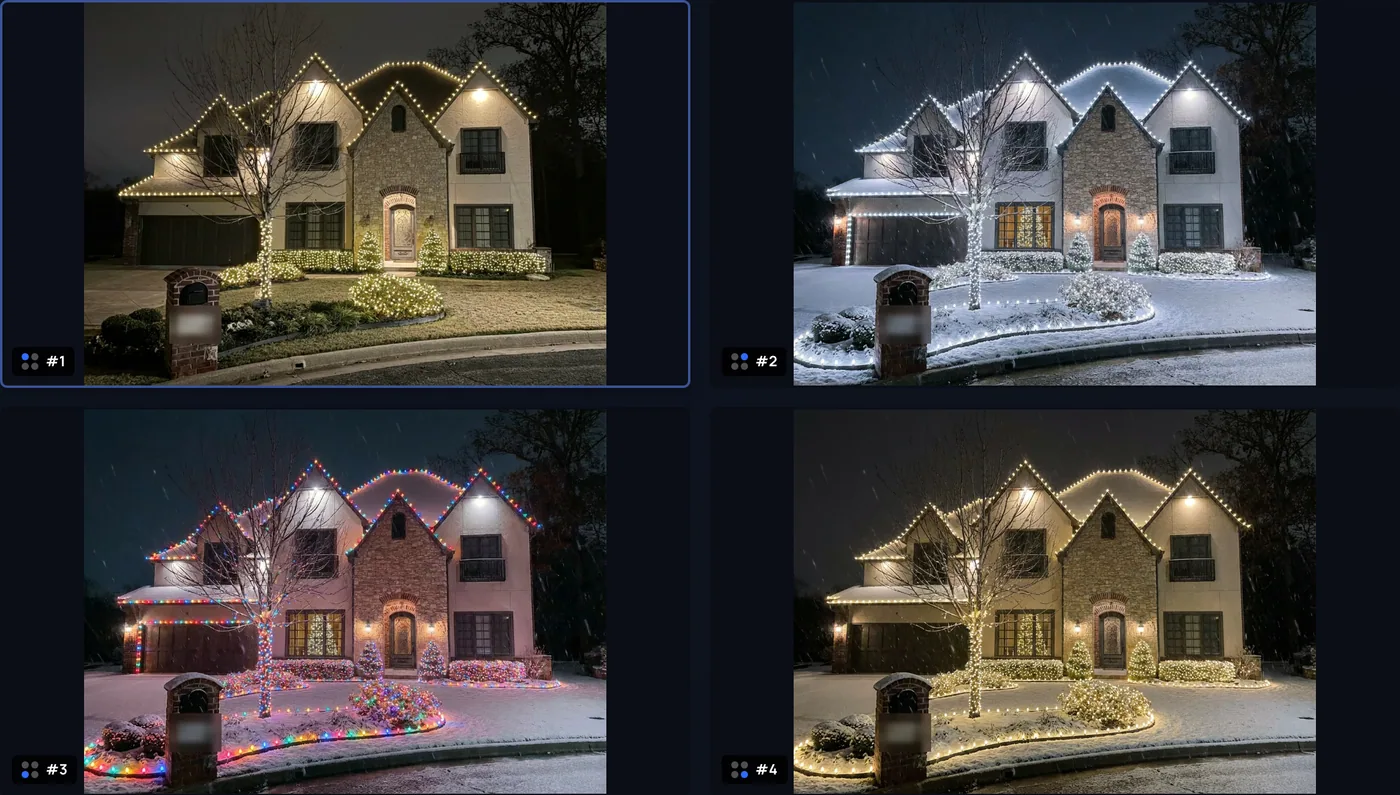
The better way is to show the options on their own house:
- Start with a clean front photo. Daylight, straight on, whole house in frame.
- Make the recommended look first. Use the house style and materials to pick the starting point.
- Make one or two alternatives. Usually the other white, or multicolor. Keep it to two or three choices.
- Show them side by side. On a phone, a homeowner can flip between looks in seconds.
- Let them decide, then quote what they picked. Price the colour they actually chose.
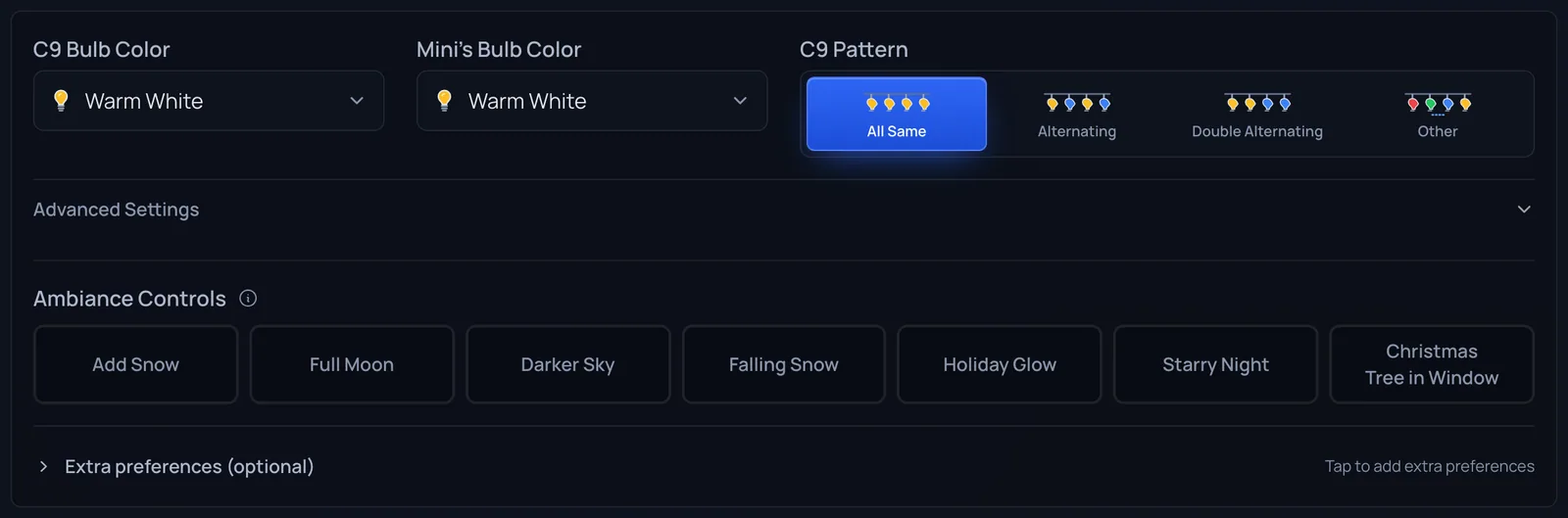
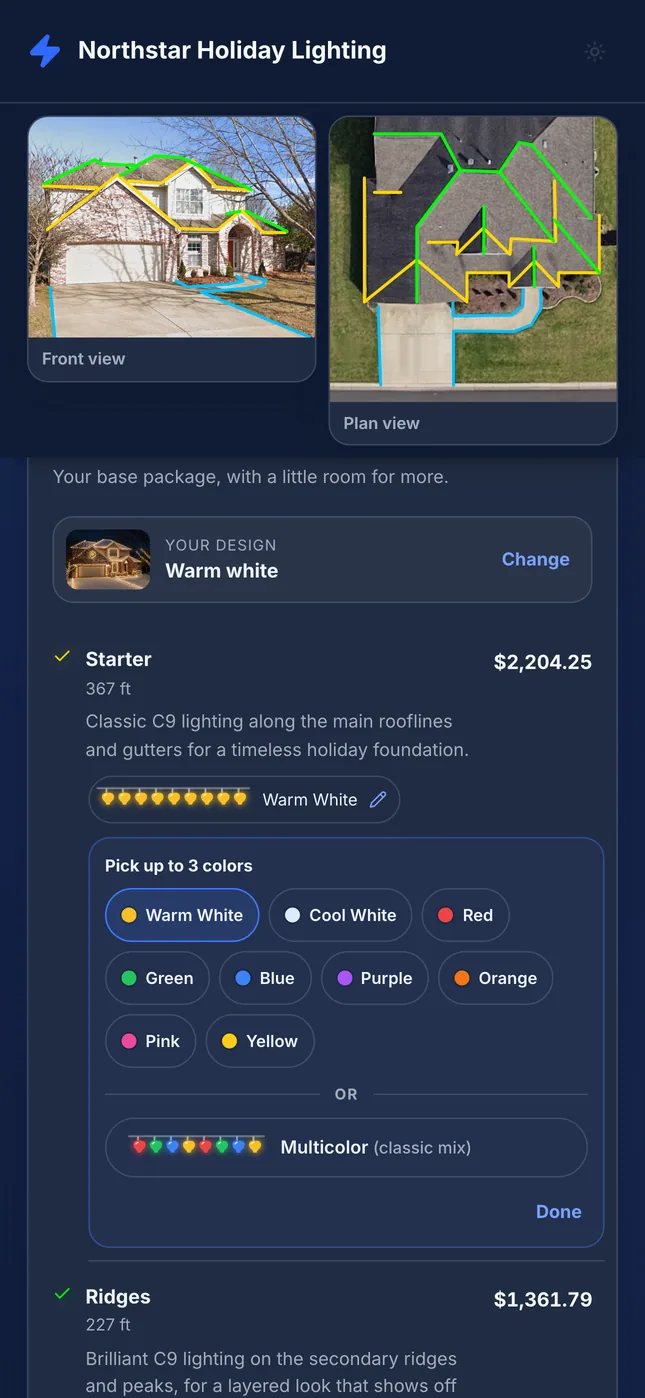
In Light AI, the mockup controls let you choose C9 and mini bulb colours separately, plus the C9 pattern and ambiance such as snow or a darker sky. You can add up to eight mockups per project, so a warm, a cool and a multicolor version of the same house is easy. Each generated image uses credits from your balance, and the Generate button shows the cost first. See generating AI mockups.
When you publish the quote link with Approve in Light AI, you can let homeowners adjust bulb colours themselves, per line, before they approve. That gives them a sense of control and saves you a round of texts.
Remember that a mockup shows the concept, not the exact installed result. Real bulbs vary by product, and streetlights and porch lights change how a house looks at night. Say so in your client message.
A colour decision checklist
For contractors, run through this with each homeowner. For homeowners, use it before you buy.
- Note the house style (traditional, modern, farmhouse, brick ranch)
- Note the main material colour (brick, stone, siding) and gutter colour
- Check HOA rules on colours, dates and approval
- Look at what the neighbors are doing, and decide whether to blend or stand out
- Ask who the display is for: kids, curb appeal, a classic look
- Show the recommended colour and one or two alternatives on the actual house
- Consider a mixed design (warm roofline, multicolor trees)
- Confirm the bulb types and colours match the products you install
- Price the colour the homeowner chose, not a default
Frequently asked questions
Is warm white or cool white more popular for Christmas lights?
It depends on the neighborhood and the house. Warm white is the common choice for traditional and brick homes, while cool white shows up more on modern homes and light siding. The best answer is to compare both on your own house.
Does multicolor look tacky on a nice house?
Not when it fits the design. Multicolor works well on simpler homes and on trees and bushes, and many good designs pair a warm white roofline with multicolor on the ground.
Can I mix warm white and cool white on the same house?
You can, but it's harder to make look intentional. Most installers mix white with multicolor instead, or keep warm and cool on clearly separate features such as the roof and the trees.
What colour Christmas lights look best on red brick?
Warm white usually looks best on red brick because it deepens the warm tones. Cool white can make brick look grayish at night, and red bulbs in multicolor can blend into the brick.
How can I see what lights will look like before buying?
Ask your lighting contractor for a mockup of your own house in each colour you're considering. Seeing two or three options on your actual home is far more reliable than a store box or a neighbor's display.
Quote your next house with Light AI
Measure the roofline, show the homeowner a lighting mockup of their own home and send one quote link they can approve from their phone. Start on the Free plan with 100 credits each month and no card required.